

Royalty
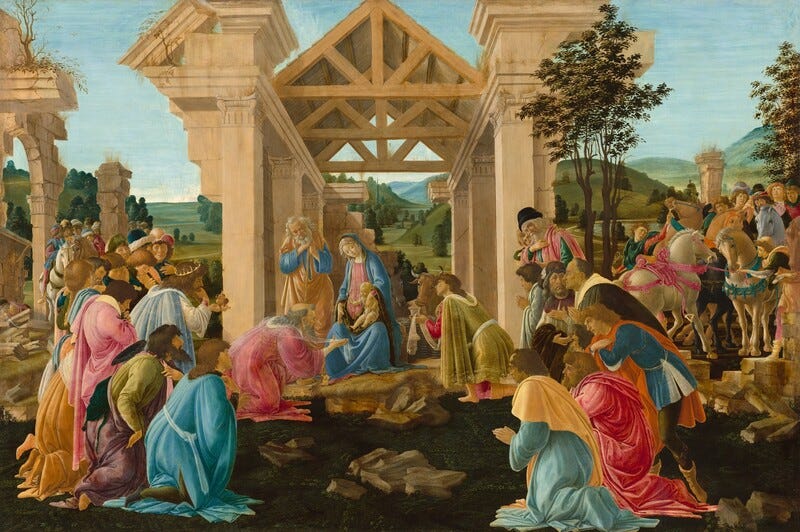
The Adoration of the Magi, c. 1478/1482, Sandro Botticelli
We know from Matthew 1 Jesus has come as the promised Saviour Priest King of Israel. The problem is there is a pretender claiming David’s throne in the holy city. So, when these Astronomer Kings see the remarkable appearance of a biblical symbol of rule, a star, ‘at its rising’ (this is the etymology of the word ‘east’), and somehow discern it marked the dawn of the age of the promised King of the Jews, naturally they go to Jerusalem to see where he was to be born.
It is notable they still need biblical revelation to continue to home in on his location. Like in the genealogy, Matthew glosses the biblical material, with a mixture of its own broader context and further reflection to dually highlight the seeming contradiction of Bethlehem’s smallness and yet significance, as the city of David’s birth and his early shepherding.
Astonishingly, the worship of this Shepherd King is mentioned three times. Minimally this could be taken as paying homage, but given what Jesus himself was soon to say (4:10), clearly Matthew expects us to find a greater significance.
Having been told to search carefully, as the Magi approach, the star shows itself truly to be no ordinary star, as it pinpoints where they are to find the child. The strength with which their joy is described suggests they really have understood the significance of this child. And their royal gifts of tribute show Jesus already receiving the glory of the kings of the nations into his Kingdom.
Reversal
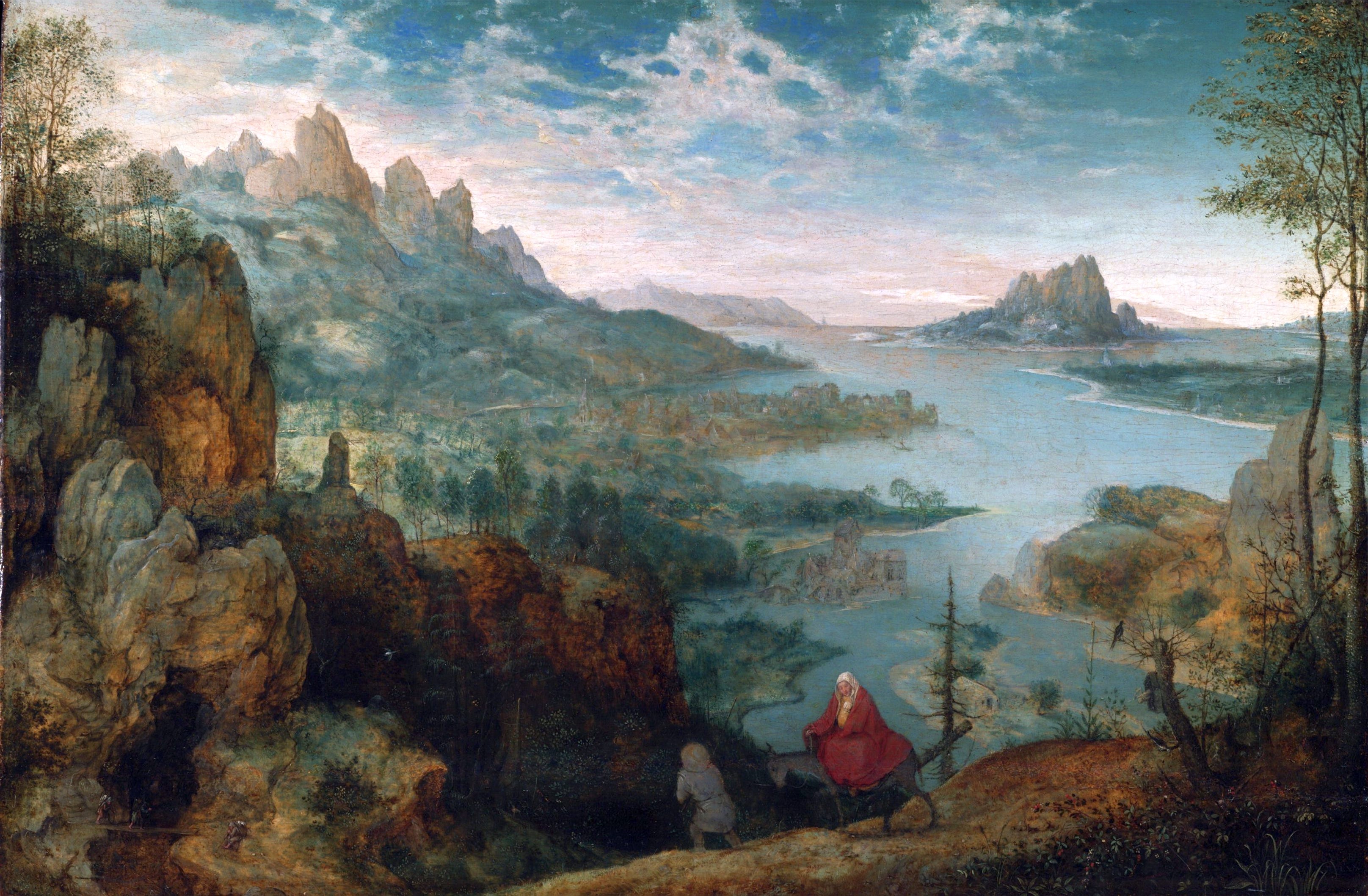
Landscape with the Flight to Egypt, c.1563, Pieter Brueghel the Elder
Herod is given a genuine opportunity to repent and discover the true King of Israel. But he and all Jerusalem with him seem to have been content with the status quo. Whatever the exact motivation or machinations, it seems remarkable that along with the chief priests and the scribes, no one bothered to go the six miles or so with the Magi even to investigate this claim to Kingship.
Herod’s statecraft appears more suspicious than he perhaps realised, and this is confirmed by a heaven-sent dream. With his pride failing him on multiple levels, Herod descends to attempted regicide through mass infanticide. He is painting himself as Pharaoh and his court as his own foolish magicians as he tries to kill his way out of the world upside-down-turning rescue God is bringing.
So, as well as following Israel’s well-trodden path of flying to Egypt in case of emergency, Jesus also reverses it by fleeing from an Israel which has become Egypt (a pattern which Jeremiah prophetically foreshadowed). This does not bode well for the end of the story for the new Egypt, as it was not a happy ending for the old Egypt which didn’t listen to God, or its old king who claimed too much authority. This shows the state of Israel, but however Sunday-school it sounds, it also shows the hereditary instinct of all our hearts. Like our first biological father Adam, and the darker side of our nature reflected in the Edomite (which is a play on the name Adam) Herod, we all want to usurp God’s anointed rightful rule for our own, and all our sins did in fact contribute to the regicide of Jesus.
Fulfilment
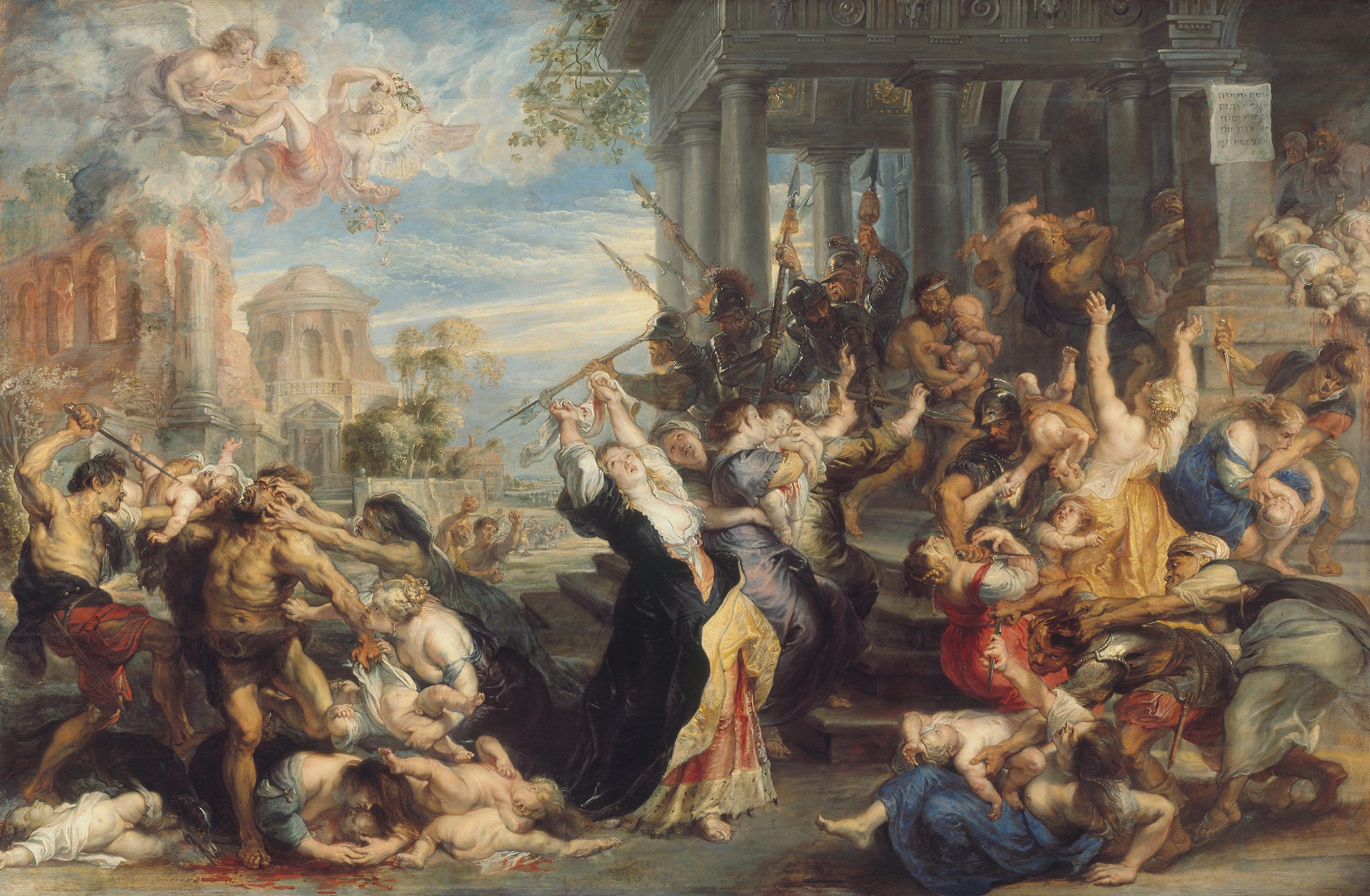
The Massacre of the Innocents, c.1638, Peter Paul Rubens
The second half of the chapter works through ways Jesus fulfils direct sentences from Israel’s Scriptures as well as Israel’s story. First, just like his namesake, Joseph has dreams resulting in the preservation of bread (Bethlehem means ‘house of bread’) which will ‘feed’ the whole world. And this happens as the new Israel is called out of Egypt, reinforcing that the old Israel is the new Egypt. This also puts Jesus in Moses’ shoes as a new Moses returning to shepherd his people. Jesus embodies Israel’s laity, leader, and Lord. And yet he is a helpless baby reliant on the care of his mother and the protection of his father in the face of the terror of the godless state.
The placement of Rachel’s weeping at the massacre of the innocents portrays another incredible polarity of these incidents. Herod’s cosplay is no joke. The proper response to the horrific slaughter of children is rightly captured by the inconsolable mourning of a hopeless mother. Yet Matthew’s namechecking Jeremiah emphasises the context from which this quotation is drawn. Rachel’s weeping is the personification of the loss of her ‘children’ into exile in Jeremiah, but it in fact comes surrounded by hope of a greater future for them at their restoration. Similarly, this incident marks the birth pangs of the new coming Kingdom, anticipating the shedding of the blood of a Son required to inaugurate the restoration of the Kingdom to levels never seen before.
The final fulfilment is not in fact a quotation but distils the collective expectation of the ‘the prophets’. Jesus’ identity as a Nazarene has several roots, the main one likely being its word play with the term for branch, which sounds like the word used for the promised shoot of David whose Kingdom would transform the whole world. It may also pick up the Nazirite who is consecrated for holy war. This final fulfilment is the capstone to Jesus’ revealed identity in this chapter. Jesus is to be the true Shepherd King of his people who will be worshipped by the whole word, who comes into the late-stage mess of Israel as the foxes guard the henhouse, and through serious birth pangs, is a shoot of hope from heaven who will wage holy war for the earth.
Preparation Questions for Matthew 3
How does Matthew 3 connect with and follow on from Matthew 1 and 2? (e.g. think about Kingdom, Jerusalem, fulfilment)
Look up Isaiah 40:1-11, 2 Kings 1:8, and Malachi 4. How do they help us understand John the Baptist’s role?
What do John’s words in 3:7-10 tell us about Israel’s condition?
What does John tell us Jesus has come to do in Israel in 3:11-12?
What do the different details about Jesus’ Baptism teach us about him?
Focusing on the content of the voice from heaven’s statement in v17 ?
How might 2 Samuel 7 and Psalm 2 help us with understanding ‘Son’?
How might Genesis 22 help us understand ‘beloved’?
How might Isaiah 42:1-4 (and the broader servant context) help us understand ‘servant’?
In light of Chapter 3, why is John the Baptist such a significant figure in God’s salvation story ?
What are we expecting will happen next if we had only read Matthew 1-3?
What does this passage teach us about how to be a disciple of Jesus?
Write down any remaining questions you have.